Wednesday, July 13, 2022

Vermont: Fall Solstice in The Green Mountain State

New England Fall Foliage Road Trip 2021

Vermont
September 19-24, 2021

After a long break from traveling because of COVID, Roger and I returned to our older 19-foot Pleasureway camper van and completed a two-month fall foliage road trip through Vermont, New Hampshire, Maine, Massachusetts, New York, and Pennsylvania.

Woman and man standing in front of a camper van.
Ready to go! I remember how hot and muggy it was that day.

Some of you may be planning or just contemplating a fall foliage trip, so this is a good time to tell you about ours. I hope it inspires you to get out and explore and marvel at the beautiful colors of the natural world.


Our Starting Point: Midlothian, Virginia


Our trip started in Midlothian, Virginia, in early September where we participated in a family celebration for my stepfather’s 80th birthday. We retrieved the van from storage and brought it in for planned service for new tires, headlights, and an oil change. We unexpectedly added new brakes to the job which delayed our departure by two days. (For those of you new to this blog, see our March 2020 story about Going Home at the start of the COVID-19 pandemic.)


Another prep purchase was the Luggable Loo from Dick’s Sporting Goods. We wanted to have the flexibility to boondock. Yes, our van has a toilet and gray and black water holding tanks, but we prefer not to use it for #2. A Luggable Loo is a five-gallon bucket with a toilet seat, lined with a special bag for that purpose. When sealed properly, the bag can be disposed of in a regular trash can. We live in Alaska and know what it means to be remote. Going in a bucket is not new to us. But this will be our first bucket experience on the road.


Highway with cars, lined with green trees.
The foliage in northern Virginia was still quite green on September 17.

Finally, a few nights before we were to leave Virginia, I woke in the night and remembered toll roads! The East Coast has many tolls. The next day I went online and purchased a Uni Epass which works in most eastern states. It arrived quickly and was easy to set up and activate.

New Jersey turnpike with many cars.
I told Roger that this day of driving will be the worst of the whole trip, the DC-New York City corridor, and I was correct!

Our mooch trail to Vermont included our niece and her husband (and two sweet dogs, love you Louie and Archer!) in Dumfries, Virginia. We also stopped for a night at the home of a close college friend and her family in Washington Township, New Jersey. They treated us to New Jersey bagels, the best because of the hard water. From there, we drove north along the Hudson River and the New York and Vermont border.


Distant view of New York City.
Roger seeing NYC for the first time—even from a distance—was like when I first saw the Golden Gate Bridge in San Francisco. Iconic images that once seemed like fairy tales become real.


Leg 1: Washington Township, NJ > Bennington, Vermont & Woodford State Park (278 miles, ~5 hours)


Map of route from New Jersey to Bennington, Vermont.

The drive on U.S. Highway 7 North to Bennington was comfortable and scenic. We had a bluebird day, and I gazed out the window as we left the flatlands of New Jersey and entered the mountainous landscape to the north, including the Hudson Highlands and Taconics, as well as the Berkshires to our east and the Catskills to our west.


We drove through Woodbury, Kingston, and Albany before crossing the Hudson and entering Vermont. As soon as we crossed the state line, we saw nothing but mountains and trees in the distance. The colors were just beginning to turn. Not sure what we’d find for stores down the road, we filled the tank and bought groceries to last the next few days.


Picnic table on the shore of a blue lake lined with trees..
Woodford State Park, Woodford, Vermont

Vermont is just as we imagined. Rolling hills of fresh-cut hay, red barns, and the faint scent of manure in the air. Quaint without trying to be quaint. We appreciated the lack of strip malls and urban retail sprawl. We drove from small town to small town without a single Walmart in sight. It reminded me of Germany where regulations require green space between towns and cities.

Blue lake and beach. Three small boats on the beach.
Just starting to see tinges of color.

To make up for the two days we lost for the brake job, we skipped our planned visit to downtown Bennington and drove directly to Woodford State Park Campground where we settled in for two nights.


Reservoir lake with lily pads floating in the water. The water is reflecting the blue sky.
Adams Reservoir, Woodford State Park, Woodford, Vermont
Woodford State Park covers 398 acres surrounding Adams Reservoir on a mountain plateau 2,400 feet in elevation and borders 14,000 acres of the Green Mountain National Forest. We stayed in site #85 in the newer area of the campground and near the bathrooms and showers. The campground was only partially full, and we had plenty of space and privacy.

Campervan parked in camp site, surrounded by many green trees.
Site #85, Woodford State Park, Woodford, Vermont

During our full day in the park, we hiked the 2.7-mile Reservoir Loop Trail around the reservoir and then relaxed by a campfire in the evening. 


Hiking trail with lots of mud and tree roots.
The Reservoir Loop Trail reminded me of Juneau—muddy and rooty in spots.


Leg 2: Woodford State Park > Middlebury, Vermont (97 miles, ~2 hours)


Map showing route from Bennington to Burlington via Middlebury.

We got an early start at 9 a.m. (early for us) and headed north again on U.S. Highway 7. We stopped at Brandon RV and bought a new freshwater pump and an outdoor shower kit. (Reminder, we live in Juneau, Alaska, and keep the van in storage down south when we’re not traveling, so the only time we have to do projects is when we’re traveling.)


In Middlebury, we stopped at Rosie’s Restaurant for lunch where I ordered a Reuben and Roger got tomato soup and the turkey salad wrap special. Rosie’s is one of those comfort food diners where locals eat. The kind of place we like. We also ordered a salad and a piece of chocolate cream pie to-go for later.


We dropped in at the Ralph Myhre Golf Course, an 18-hole public course at Middlebury College, and luckily for us, they were able to fit us in for nine holes. It's hard to schedule a tee time when you're on the road. The fairways were more narrow than what we’re used to and the greens were often elevated, so we had to be careful and play our short game or our balls would roll off the back of the green. Regardless of what our scores say, we enjoyed the exercise on a beautifully warm, sunny, autumn day.


Man putting on golf course green. Blue sky.
Ralph Myhre Golf Course, Middlebury College, Middlebury, Vermont


Leg 3: Middlebury > Burlington, Vermont & North Beach Campground (37 miles, ~1 hour)


After golf, we drove to Burlington, a bigger city than I had imagined, with narrow streets and tight turns for a camper van. We made our way through the city thanks to Google Maps and found site #95 at the North Beach Campground, a municipally-owned campground on Lake Champlain popular with bicyclists for its proximity to the Island Line Trail which we biked the next day.

Campervan at spacious campsite.
Site #95, North Beach Campground in Burlington, Vermont.
When we booked online, only three spots were available. Our corner site turned out to be a prime spot. Many other sites were side-by-side, with little distance between them, but we had plenty of space.

Beach at Lake Champlain. Blue sky with white clouds.
Lake Champlain, Burlington, Vermont
The campground is next to a section of the Island Line Trail that runs along the 490-square-mile freshwater lake. This is the kind of campsite we like. We can get around with our bikes and feet without having to drive. When you live on the road, it’s sometimes a hassle to have to drive again once you get to where you’re going. As its name implies, beach access is just a short walk or bike ride from the campground.

Woman riding bike on paved, tree-lined bike path.
The Island Line Trail, Burlington, Vermont
On our free day (non-driving day), we biked 17 miles from the campground to the Colchester Causeway that stretches into Lake Champlain.

Man biking on causeway in Lake Champlain.
Colchester Causeway, Colchester, Vermont
After riding all day, we were too tired to walk, so we rode again in the opposite direction to Foam Brewery for beers, then to Citizen Cider for dinner. Walking is totally doable if going to town for the day. We were glad we had bikes and made it back to the campground just as it was getting dark.

Leg 4: Burlington > Elmore, Vermont, & Elmore State Park (51 miles, ~1.25 hours)


Man and woman holding up their ice cream cones.
Ice cream for lunch!
Our stomachs guided us to our next destination > Ben & Jerry’s Ice Cream Factory of course! Then to the Cabot Farmers' Store , both in Waterbury. We had ice cream for lunch and Vermont cheese, apples, wine, and cider for happy hour.

Plate of apple, cheese and crackers, bottle of wine, and Robert Frost book.
Eating, drinking, and reading our way through Vermont.
Food is a good theme to guide anyone traveling through Vermont. If you are interested in food and sustainability, I recommend reading (or listening on audio as I did) The Town That Food Saved: How One Community Found Vitality in Local Food (2010) by Ben Hewitt . The book taught me about the concept of eating closest to the sun, which means not only eating more greens that get energy directly from the sun, but also eating food from where you live, versus something that was shipped to you or, worse yet, food that was processed and packaged in a factory far, far away. Hewitt was born and raised in Vermont and has his own farm. Through a series of interviews in and around the town of Hartwick, Vermont, Hewitt reveals the economy, complexities, politics, and humanity of the local food movement.

Landscape of colorful field and mountains.
Vermont landscape, September 2021.
Elmore State Park, situated on the shore of Lake Elmore and at the base of Elmore Mountain (elev. 2,608 feet), is a quiet and peaceful park. The weather was still quite warm that day, and I was tempted to jump in the lake to cool off. We took advantage of this stop on the road to rest and catch up on some reading.

Red foliage of a tree against the blue sky.
Bring on the color!
I was reading Robert Frost A Life by Jay Parini. Frost lived in Vermont for about 40 years and became its poet laureate in 1961. Another good Frost/Vermont resource is a 1991 New York Times article by Robert D. Kaplan, “Robert Frost’s Vermont.”

Man sitting at fire at a campsite with campervan .
Elmore State Park Campground has spacious sites with plenty of trees and shrubs for privacy.

If all you’ve ever seen of Vermont is from television or literature, it’s fairly accurate—rolling hills, countryside, farms, small college towns, and friendly people. Our camp neighbors at Elmore were Sam Billings, a violin maker, and his girlfriend and dog. They traveled together, and Sam had a complete workshop in the back of his camper van.

Red, orange, and yellow leaves on the green grass.
Fall leaves meet green summer grass.
John Irving is one of Roger’s favorite authors. (The World According to Garp, Cider House Rules, Last Night in Twisted River.) Many of Irving’s novels take place in New England.


A field of corn brown cut corn stalks in the foreground. Mountains in the background. Blue sky and white clouds.
After the corn is cut.

“Being from California, it was always hard for me to imagine when John Irving wrote about being a professor in a small college town. California doesn’t have small college towns. But being here, you can really see it.”


A bee on an aster flower.
A busy bee photobombs the asters.

I have a long list of Vermont places I had researched and hoped to visit, but we just didn’t have enough time (remember, we had to cut two days from our trip because of the brake job), and some places were still closed because of the COVID pandemic. When you go, you might also consider visiting: the Southern Vermont Arts Center (SVAC); Billings Farm & Museum for ice cream; Sugarbush Farm for maple syrup, cheese, and walking; and Shelburne Craft School.


We left Vermont, and our first stop in New Hampshire was Robert Frost’s home in The White Mountains. Stay tuned for more about New Hampshire in the next article.


An orange catepillar with black stripes on its back crawling on a rock.

Meeting and Passing

By Robert Frost


(From The Collected Poems of Robert Frost, 1930)


As I went down the hill along the wall

There was a gate I had leaned at for the view

And had just turned from when I first saw you

As you came up the hill. We met. But all

We did that day was mingle great and small

Footprints in summer dust as if we drew

The figure of our being less than two

But more than one as yet. Your parasol


Pointed the decimal off with one deep thrust.

And all the time we talked you seemed to see

Something down there to smile at in the dust

(Oh, it was without prejudice to me!)

Afterward I went past what you had passed

Before we met and you what I had passed.


A bunch of red berries from a tree.

© copyright 2022. Patricia E. Harding. All rights reserved.


Wednesday, January 19, 2022

A Freezing Fun Time at Fur Rondy in Anchorage, Alaska

Photo of people standing in front of the auction stage.
In 2019, Roger and I attended the annual winter festival in Anchorage, Alaska, known as Fur Rondy.

February 23-24, 2019

Our friend, Troy, was hiking when his friend whispered, “Stop.” Instinctively, Troy knew that his friend had seen a bear. Not just any bear, but a Southeast Alaska Island brown bear. Brown bears in Southeast Alaska and Kodiak are grizzly bears but are generally bigger than grizzlies found in the interior of Alaska and the lower 48. The brown bears typically grow larger because of the prevalence of protein-rich salmon in their diets. Troy was alert and prepared because he knew that only brown bears inhabited the island where they were hiking.

Through the trees, the friend saw just the hump of a brown bear’s back across the top of a tree hollow. The bear had been sleeping. Troy chambered a round in his rifle just as the bear rose from behind the tree. The aggravated bear looked up the trail; it looked down the trail, homed in on the two men, lowered its head, and charged.

Photo of a brown bear paw. About four times larger than a man's hand.
An Alaska brown bear paw.

Troy dropped to one knee, aimed, and pulled the trigger. He had only seconds to react. The bear was a mere twenty feet away. Fortunately, he had good aim. The bullet went through the bear’s neck and down its artery, dropping it immediately.

We ran into Troy at the 2019 State of Alaska Hide and Horn auction, part of the annual Fur Rendezvous held in Anchorage. Fur Rondy or just Rondy, began in 1935 when Anchorage had just 3,000 residents. The first winter festival was scheduled when miners and trappers usually came to town to sell their bounty. Today, the festival celebrates history and culture, provides entertainment, and attracts tourism.

While nearly all bears in Alaska are harvested by legal hunting, regulations allow a person to kill a bear in “defense of life or property.” However, the person may not keep the bear and must file a report and surrender the bear’s skull and hide to the Alaska Department of Fish and Game. In Troy’s case, he and his friend had to stop what they were doing, remove the hide and skull of the bear, and deliver them to ADFG. Not an easy task. According to ADFG, a brown bear hide can weigh 100 pounds, and the skull can add another 25 pounds.

Troy was hoping to reunite with the bear he had killed—well, with the hide of the bear anyway.
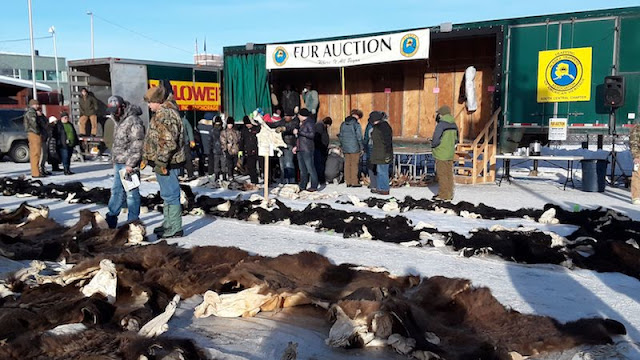
Photo of brown and black bear hides spread out on the ground in front of the auction stage.
Auction goers preview brown and black bear hides at the annual Hide and Horn Auction.

Anticipating that the hide from the bear he killed would be at the Hide and Horn Auction, Troy flew to Anchorage, intending to bring it home. ADFG does not track the hides, and Troy identified the one he had shot among the more than 100 hides by using photos he had taken of identifying marks on the paws, the location of the bullet hole in the neck, as well as the color and size of the hide. Other bidders were also interested in this hide because of its condition, size, and dense hair. Ultimately his high bid of over $800 was accepted, and he was declared the winning bidder and was awarded the bear hide.

Once a year, ADFG sends hides from defense-of-life-and-property kills, such as Troy’s, as well as others from roadkill and those that have been confiscated from poachers or other illegal hunters to Anchorage, where the South Central Chapter of the Alaska Trappers Association organizes a fur auction.

Roger and I flew from Juneau to Anchorage for a long weekend, arriving in time for the Fireworks Extravaganza on Saturday night. The following day, we went to the fur auction as onlookers, where we ran into Troy, and he told us his bear story.


Photo of a white Dall's Sheep cape.
A Dall’s sheep cape is ready for auction. According to the National Park Service, “Dall’s sheep inhabit some of Alaska’s most rugged alpine areas.”

The auction also sold caribou and moose antlers, and sheep horns. A set of muskox horns went for $1,000. River otter hides went for between $50 and $100 or more. Black bear hides sold for hundreds of dollars, depending on the size and quality. Brown bear hides sold for more. The highest bid was $3,300 for a brown bear hide. Cub hides were popular too and went for between $500 and $700 apiece.


This auction is the only opportunity for people to legally purchase animal hides in Alaska and attracts collectors worldwide. This auction benefits wildlife, hunting, and education programs of both ADFG and the Alaska Trappers Association.

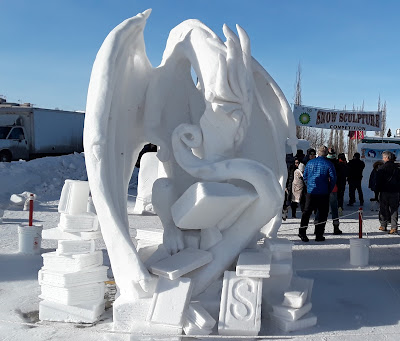
Photo of a snow sculpture of a dragon sitting among a pile of books.
“Not All Treasures Are Gold” carved by AK Awesome.
The auction moved slowly, so we broke away to visit the State Snow Sculpture Championship, which was a short walk from the auction area. We returned to the auction, then left again to watch the start of the Open World Championship Sled Dog Races. The fastest sled dogs on earth race 25 miles through the streets of Anchorage. We ate reindeer hotdogs topped with grilled onions, sauerkraut, and mustard from a food vendor. So good!

During our final visit to the auction, we witnessed Troy’s successful bid on the hide, waited for him to claim it after the end of the auction, and helped him get it into his truck. (FYI—not only are bear hides heavy, they also stink!) Troy already had a taxidermist lined up to process the hide, so we quickly said our goodbyes, and he was on his way.

Don’t let the cold Alaska winter keep you from attending Fur Rondy. You can enjoy outdoor winter activities when you dress appropriately for the conditions. If you have real animal fur garments, Anchorage is the place to wear them. Fur Rondy is one of the few places where it is still acceptable to wear animal fur.


Photo of the Rondy Royalty, all dressed in fur, on the auction stage.
Rondy Royalty 2019

Fur Rondy 2022 is scheduled for February 25-March 6. Planned events include the Alaska Cornhole Championship, Alaska Hold ’em Tournament, a Native Arts Market, traditional snow sculptures, fur auction, and fireworks. For a complete list of events and additional information about Fur Rondy, visit the Rondy website at https://www.furrondy.net/.

NOTES: Thank you, Troy, for permission to include your bear story in this article. Every day I am thankful for my husband, travel partner, editor, and proofreader, Roger.

Thursday, November 12, 2020

Road Trip 2020: Virginia & Going Home

Virginia & Going Home

March 7-17, 2020

A toast to celebrate our successful and eventful Winter Road Trip 2020.

Our niece’s March 7 wedding in Virginia Beach was the inspiration for our Winter 2020 cross-country road trip. We left Juneau on January 7, 2020, and picked up our camper van stored in Sacramento. All our adventures from California to Virginia naturally fell into place—a family visit in Palm Springs, a college roommate reunion in Las Vegas, a family reunion in Mississippi, and several wonderful visits with longtime friends.

We left Juneau on January 7 and drove across the country in two months.

A road trip like this required planning, but we couldn’t have anticipated every scenario. (See the Blog Archive for posts of previous legs of our journey.)

The Wedding

On March 6, we left the Outer Banks National Seashore in North Carolina and drove north to Virginia Beach. We looked forward to visiting family and friends as well as celebrating my niece’s wedding.


We visited with many dogs on this trip. My niece's dogs were snugglers.

When relatives live across the United States, a wedding also serves as a de facto family reunion. We stayed in Virginia Beach three nights and enjoyed Sunday dinner with my dearest friend since seventh grade before departing for my mother’s house in Midlothian.
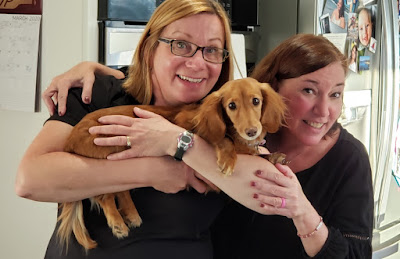

My friend Bonnie's dog, Willow, was lovable too.
Midlothian

The plan was for me to visit my mother and step-father for three weeks before flying to Maine to see my son during his spring break. Roger was to fly to the West Coast ahead of me to attend a meeting and visit his children. That was the plan as of March 9. Two days later, everything changed.


Coronavirus, cancellations, and changes

COVID-19 was spreading fast, and events across the country were being canceled. As of March 9, the United States had experienced 26 deaths caused by COVID-19, and there’d been 4,000 deaths worldwide. (See Notes 1) By March 11, Washington state, San Francisco, and Oakland announced size limits on large gatherings.


Good morning from Midlothian, Virginia! Our final destination.

Our concerns quickly shifted from, “Do we cancel our plans?” to “Can we get home before the whole country shuts down?” As chairman of the planning committee, Roger had been in regular contact with meeting planners. After much back and forth, they decided to cancel their meeting.

Feeling spoiled at Mom's house.

I spent two days agonizing over what to do. I would make up my mind to go to Maine in one moment only to change it a few hours later. I went back and forth several times until bedtime on the evening of Thursday, March 12. Final decision. I would go home with Roger. By then, the NBA, NHL, and NSL had all suspended their seasons. The NCAA canceled championship basketball tournaments, followed by Major League Baseball canceling spring training games. What seemed like a choice just two days earlier—should I stay or should I go?— became an imperative—we must get home to Juneau, together, as soon as possible.

I inherited my love of food and cooking
from my mother. She treated us to our favorites.

We spent most of the day on Friday, March 13, (Yes, Friday the 13th!) online, changing our flight plans. Most airlines waived rescheduling fees, but we had to reschedule all our flights online. The airlines would only accept phone calls from people in emergency situations or whose flights were scheduled in the next 48 hours. One of the biggest mistakes we made was rerouting our flights through Boston. Why I thought we had to fly via Boston, I can’t tell you. We could have flown to Seattle directly from D.C.

After securing new flight plans, we spent the rest of the weekend preparing the van for storage. Storing the van in Virginia had been our plan all along. We wanted to stage it for our next few trips exploring the East Coast. We found a storage yard less than five minutes from my mother’s house in Midlothian. We left the sleeping bags with my mother, who would take them to the cleaner. I also left her with several boxes to ship to Juneau. We put the bikes and the bike rack inside the van and placed an open container of mothballs inside to ward off critters looking for a new home.


Virginia was the end of the road for this trip, and the van went into storage.

Saying goodbye to the van was bittersweet. Our van is like our home. It’s hard to say goodbye when you don’t know when you’ll see each other again.

Flying Home

We flew out of Richmond to Boston via Washington, D.C., on Monday, March 16, wiping every surface with Clorox wipes we swiped from the van.


Carlsbad, the Year of the Rat mascot
we found in Carlsbad, New Mexico,
is ready to fly to his new home in Juneau.

Our flight from Boston to Seattle got delayed, delayed, delayed, then finally canceled. It seemed like the only people at the airport were our cohort of passengers trying to get to the West Coast. I felt sad for the many college students traveling home for spring break. Schools told them to take everything with them as if they would not be returning. Boston is home to several music schools. Many of the students carried instruments in addition to their large suitcases full of their belongings. College classes and K-12 schools across the country would move online or be canceled for the rest of the semester.

Earlier in the day, when one of the Boston delays would make us miss our connection in Seattle to Juneau, we had to stand in a long line to rebook our next flight. I volunteered. Some people wore masks. My step-father had given us masks before we left the house that morning, but we did not wear them. In retrospect, it was probably a dumber mistake than flying through Boston. I don’t know why we didn’t wear them. I guess we were still naive about the seriousness of the situation. But in fairness, the public messaging at the time was that a mask would only help those already infected from spreading the virus and would not protect people from being infected. Public messaging in the early days of the pandemic also discouraged using N-95 masks because healthcare facilities were experiencing an N-95 mask shortage. The N-95 mask was believed to offer the best protection, and homemade cloth masks had not caught on yet.

The gate area at Richmond International Airport was eerily empty on the morning of March 16, 2020.

We’ve never seen so few people
at Logan International Airport in Boston.

Eventually, Alaska Airlines canceled our flight to Seattle at around 10:00 p.m., and we had to stand in another long line to rebook. We left the gate area with some of the other passengers and got in line at the Alaska Airlines desk downstairs. While waiting in that line, I overheard a woman on the phone. She was desperate to help her daughter get home from Ecuador.

She was not part of our group. She came to the airport, thinking she could get answers if she was there in person. Her daughter had been visiting the Galapagos Islands when the Ecuadorian government abruptly canceled all flights in and out of Ecuador. The woman was calling every U.S. government and airline official she could think of with 
no success. I heard her say to a government official on the phone, “You’re just reading to me what’s on the website. I already read that myself. That information is not up to date. They’re not letting any flights out. Is there anything else you can do?”

By now, many of us felt helpless with the situation.

We had time to appreciate Chris Williams’s “Seascape” installation during our many hours of waiting at Logan's Terminal B. 


Alaska Airlines provided hotel and food vouchers for all the passengers on our canceled flight. They sent an email link with a list of options, and we chose a hotel—a nice hotel in Chelsea. Then we had to retrieve all our luggage and schlep it to a shuttle bus to the hotel. Again, these poor college students with all their luggage. While in line (again) at the hotel, a young man ahead of us had large suitcases and loads of ski gear. He was a competitive collegiate skier, and the rest of the season had been canceled. He was trying to get home to Anchorage. When he got his turn at the check-in counter, he learned he had gone to the wrong hotel. Poor kid. He had to drag everything back outside and find a ride to his hotel.

Around midnight, we checked in, and I mentioned to the man at the front desk that I was born in the old Naval hospital in Chelsea. The building is not a Naval hospital anymore, but the hotel clerk said, “Oh, yeah, that’s just around the corner. Welcome home!”

To curb the spread of COVID-19, dine-in restaurants and most stores at the San Francisco airport had already closed by the time we arrived on March 17, 2020.

By the time our heads hit the pillows, we had already received an automated text from Alaska Airlines. They changed our new flight schedule for the next morning. By morning, Alaska Airlines had sent another text message with a different schedule. The message also said we should see a customer service agent when we arrived at the airport. These text messages and flight changes were automated and made no sense. They had us departing Seattle before we had even arrived there. Knowing we’d have to wait in another long line, we got on the 5 a.m. shuttle back to the airport.

The reality of the pandemic continued to settle in as we traveled two whole days to get home.

This was my third time standing in a long line for over an hour. Some people tried to jump the line by starting a new queue in the first class or special assistance line. The rest of us who had gotten out of bed extra early and had been in line for a long time already wasn’t having it. One young guy who tried to cut in line got called out and replied, “F*ck it. Who has time for this?” and left the area.


Roger, standing under Janet Echelman’s “Every Beating Second” at SFO. “The title, ‘Every Beating Second,’ referring to a line by beat poet Allen Ginsberg, represents the artist’s interest in heightening awareness of the present moment:

live
in the physical world
moment to moment

I must put down
every recurring thought--
stop every beating second (11-16)"

Who has time for this? Good question. Who has time for this? We do. We have time. Some of us have time. When I think about people who genuinely suffer—people whose lives have already been cut short by this disease or other illnesses, war, famine, or violence—I tell myself, thank God I have time for this. I have time. I am so lucky that I have time.

Aboard our Alaska Airlines flight ascending over the Bay Area.

The mood at the airport was solemn. No one wanted to be there. We all wanted to get home. No one was just starting a vacation, and no one was happy to be traveling. It was an unprecedented time in our lives. We followed social norms and saved spots in line when another passenger had to use the bathroom. We were all going through the same thing. “We’re all in this together” was an encouraging phrase we would hear over the next several months. Yet under our stoic shells, we wore layers of frustration and fear. Ultimately our travels took us through several hot zones over two days traveling from Richmond to Washington D. C. to Boston to San Francisco to Seattle and finally to Juneau.

Finally, getting closer to home. A good feeling.

There's no place like home.
After finally arriving home late on the evening of March 17, we quarantined for two weeks. Our refrigerator was empty, and family and friends graciously shopped and delivered groceries. We gradually settled into the new norm—curbside pick up, wearing masks in public, and eventually, socializing only within our small social bubble. Fortunately, the weather was improving, and the golf course opened. I started hiking regularly and planted a garden. We were relieved to be home, healthy, and together.

Hike to Dupont - our preferred method of social distancing.


We stayed in Juneau for the summer, deciding not to make our annual pilgrimage to Pelican. (See our blog article about our get-away cabin in Pelican, Alaska.) We thought it was best to stay in Juneau and respect and protect our friends in Pelican by not traveling there. Our annual visit to Pelican is usually the highlight of our year, but it was not essential. We certainly missed being in Pelican and questioned our decision but believe it was the right thing to do. Halibut fishing in Juneau was undoubtedly not as productive as in Pelican. However, we caught enough to enjoy fish and chips throughout the winter.

When we need a get-away from staying home, we retreat to the Dawn Treader for a day or two on the water.


The van and the road call to us now and then, and we have already planned a 2021 fall foliage van trip through New England. Let’s hope there’s a vaccine by then and that travel will be safer.

With my hiking bubble friend, Mary, on top of Eaglecrest Ski Area, overlooking downtown Juneau. Thank goodness there’s plenty of space for everyone.

At the time of publication, COVID-19 cases in the United States were surging to record levels—10.5 million cases and 242,000 deaths. (Source: The New York Times, 11/12/2020) Our thoughts are with the people affected by this terrible illness, especially those who have lost loved ones and healthcare workers treating patients. We will continue to do our part to make the world a safe and healthy place for everyone.

“Lots of things are mysteries. But that doesn’t mean there isn’t an answer to them. It’s just that scientists haven’t found the answer yet.” -- The Curious Incident of the Dog in the Night by Mark Haddon

Thank you, readers, for following our cross-country journey. We enjoy sharing our experiences with you and sparking your interest in some of the places we visited. Please leave comments below and sign up to receive notifications when we post new articles. You can also email us at eastmeetswestme2ak@gmail.com. 

Road Trip 2020 by the Numbers

  • 5,411 miles
  • 71 days
  • 43 friends & family visited (not including family members of people we visited or other guests at reunion and wedding.)
  • 12 states
  • 10 dogs
  • 6 national parks
  • 5 golf courses
  • 2 bikes
  • 2 cats
  • 1 family reunion
  • 1 wedding
  • 1 breakdown
  • 1 pandemic
  • 1 Walmart haircut special

NOTES

1 (Wikipedia, per CNN “Coronavirus death toll passes 4,000 worldwide”. CNN. March 10, 2020. Retrieved March 10, 2020.)

2 (“Timeline of how the COVID-19 pandemic has impacted the 2020 Major League Baseball season”, by Dayn Perry, Katherine Acquavella & R.J. Anderson July 29, 2020, at 10:44 a.m. ET)

#vanlife #crosscountryroadtrip #virginia #COVID19 #me2ak #backeast #ontheroad


Friday, October 2, 2020

Road Trip 2020: Returning to The Outer Banks

North Carolina & The Outer Banks
March 2-5, 2020

Our campsite at Oregon Inlet Campground at Cape Hatteras National Seashore.

After two relaxing and romantic nights in Savannah, Georgia, we hopped back into the van to begin our final leg of van life. I'd been looking forward to our visit to the Outer Banks of North Carolina for a long time, but, first, we drove to the city of West End to visit a Fish & Game friend who had volunteered years earlier for several of  Roger's trout projects.  Our friend treated us to lunch at Pinehurst where we enjoyed walking the golf club lobbies and absorbing some of its famous and impressive golf  history.

We drove from Savannah, Georgia, through South Carolina, to North Carolina.

Driving north on I-95, we passed another identical-looking Pleasure Way van. I waved as we passed, and the other driver honked. Soon after that, we saw a sign for cheap gas and exited. A few minutes later, the Pleasure Way we saw earlier pulled in behind us. These situations are among my favorite travel stories. We had a van-chat with the other couple who was on their way home to Virginia, and we toured each other's vans.

Two Pleasureway vans at gas station
Two Pleasure Way van builds at the gas station. (Other couple blocked out for privacy.)

We arrived at Cape Hatteras National Seashore and Oregon Inlet Campground after dark. I woke early and stepped outside with my coffee for a few moments of sunrise calm. I don't usually get up in time for sunrise, but this view!

What's better than sunrise at the beach?

We were one of about five RVs in the entire campground. Avoiding crowds is one advantage of visiting tourist destinations in the shoulder seasons.

Photo of camper van in campsite.
Shoulder-season camping means having most of the campground to yourself.

We had been traveling for two months by the time we arrived at the Outer Banks, and we looked forward to the peace and solitude Cape Hatteras National Seashore offered. We had the whole place almost to ourselves.

Man walking on sand dunes toward beach
The beach was just footsteps from our campsite.

After breakfast, we explored the beach, located just across from our campsite. We lucked out with a beautiful, blue-sky day. The sound of the waves, the birds' calls, the discovery of seashells and other treasures in the sand helped transport me to a state of tranquility.

A late winter walk along the Cape Hatteras National Seashore.

The beaches at Cape Hatteras National Seashore stretch north to south for over 70 miles. Along these shores live ghost crabs, piping plovers, loggerhead sea turtles, and coquina clams.

A victim of sea birds?
Swimmers should check with park rangers before getting into the water. Strong ocean currents can pull swimmers out to sea. Warning signs in the campground describe the dangers and what to do if caught in a rip current.

The waters off the Outer Banks' coast, also called the Graveyard of the Atlantic, are the sites of many shipwrecks over 400 years. The turbulent seas and shifting sands of Diamond Shoals create an unsafe passage for seafarers.

The fishing vessel Ocean Pursuit, three days after it ran aground.

As we continued walking south toward Oregon Inlet, we saw something in the water in the distance. As we got closer, we saw the fishing vessel, Ocean Pursuit. A park ranger told us the owner had purchased it a few days earlier, and apparently lost power and drifted into the beach it on March 1. We took these photos on March 4. 

Photo of the shipwrecked Ocean Pursuit fishing vessel.
The U.S. Coast Guard rescued three crew members from this stranded boat.

According to a News & Observer article ("Shipwreck's astonishing descent into the beach starts speeding up on Outer Banks", May 17, 2020), the Ocean Pursuit is quickly disappearing into the beach. Tourist photos on Instagram (#OceanPursuit) show what looks like the ship sinking into the sand.

Hard to see, but in the middle of this sky is a small plane.

After our walk, we headed into Nags Head for lunch. Many restaurants had not yet opened for the season, but we found a friendly pub with tasty oyster poorboy sandwiches and crab cakes. Unfortunately, I did not write down its name, so I can't tell you where we went. We visited the Wright Brothers National Memorial shortly after lunch and once again, pretty much had the place to ourselves.

Photo of airplane model of Wright Brothers plane
A model of the Wright Brothers' first flight plane.

The visitor's center was perfect for people who are interested in science and flying. I was more interested in the family dynamics of the Wright family. Wilbur and Orville's mother was the most significant influence on the boys' lives. Susan Catherine Koerner Wright's interest in mechanics inspired her sons' intellectual curiosity.

The Wright Brothers National Memorial in Nags Head, North Carolina
The Wright Brothers National Memorial in Nags Head, North Carolina.

I visited the Wright Brothers Memorial with my mother many years ago when growing up in Virginia Beach. It looks just as I remember it. The Memorial commemorates the first human flight.

I first visited Nags Head
with my mother, around 1980.
The 60-foot tall Wright Brothers Monument atop Kill Devil Hill marks the site of practice glider flights. Visitors walk from the visitor center to the monument and follow a paved path up the hill. There is little shade in the park, and I was glad to be there on a cool day.

We picked up a few groceries and returned to the van for the night. The next day we explored the southern banks. We woke to rain, so it turned out to be a good day to spend in the van. I browsed a visitor guide and picked out a few shops and other stops along the way. Because it was pre-season, some of my picks had not yet opened.

We drove through beach towns Rodanthe, Waves, Salvo, and Avon and continued to Hatteras Island Visitor Center, home of the popular, black and white striped, 198.5-foot Cape Hatteras Light House.

Channeling my
younger self

This was another day I missed the rain jacket I had left back in Austin. Fortunately, the rain was light, and we enjoyed the visitor center and museum's nostalgic character. Given a nicer day (or a rain jacket), we would have walked the nature trail and further explored the beaches at Cape Hatteras.

Our winter road trip adventure was coming to an end. Little did we know at the time, it would end sooner than we had planned. Talk about coronavirus was heating up, but no one was changing routines or considering canceling plans at this time.

The first known U.S. death was reported on February 29. On March 3, the U.S. Center for Disease Control lifted restrictions on testing. By this time, 3,000 people worldwide had died of the coronavirus.

Our next destination was Virginia Beach where we would celebrate my niece's wedding with family members I had not seen in quite some time.

Check back soon for the final article of this Winter Road Trip 2020 series including our uncomfortable flights back to Alaska.

Please leave comments or email us at eastmeetswestme2ak@gmail.com.

#me2ak #ontheroad #theouterbanks #OBX #CapeHatterasNationalSeashore #OceanPursuit #NorthCarolina #vanlife #WrightBrothersMemorial #pleasureway